
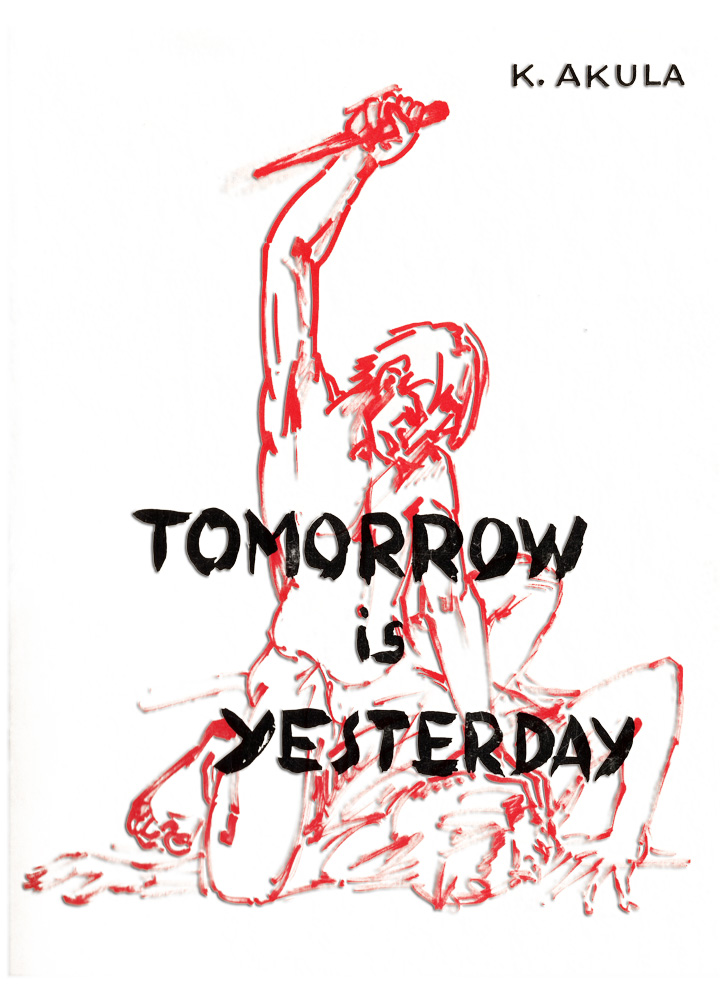
TOMORROW IS YESTERDAY is an exciting story about love and hard ship, death and revenge. It is also about war, how it hardens the heart, and it is a story of a people, how they struggle to be free. Recently widowed, the attractive and personable Mary Karaway lives with her mother and two children in a village near Haradok in the Viciebsk Province of Byelorussia. To this region come the troops of both the Russian and German armies, and the district is alternately pillaged by the soldiers of Stalin and Hitler. Caring only for her family, uncertain which way to turn, an act of kindness on Mary Karaway’s part sets off a chain reaction of revenge which ends in the death of yet another person in Canadian Toronto. Tomorrow is Yesterday tells its unusual and important story with an unblinking eye and a nice narrative pace. The reader is taken from a peaceful pre-war village into the maelstrom of war, from Soviet picnics to political murders in bedrooms at the dead of night, from Communist propaganda on the Canadian prairies to a quiet living room in Toronto’s West End. K. Akula, the author, takes the reader by the hand and shows him that, no matter what, we pay for our crimes because they haunt us to our dying day. The novel is impressive in yet another way. Tomorrow is Yesterday is the first novel in the English language to sketch in the Byelorussian background and create on the page credible human beings who happen to be Byelorussian by birth. The novel was written – in English – by the well-known Byelorussian novelist living in the West,
Kastuś Akula
Translation to Belarusian can be found here: Кастусь Акула. Заўтра ёсць учора