
ПРАЙШЛО ПЯТНАЦЦАЦЬ ГАДОЎ
Як учора, памятаю тую раніцу ў красавіку 1986-га году, калі мы з мужам пачулі па радыё вестку аб выбуху ядзернай электрастанцыі ў Савецкім Саюзе.
Я падумала : “Мой Божа, хаця-ж каб не ў Беларусі!”
Цяжка апісаць крыўду, якую мы адчулі, калі зразумелі, што Беларусь была забруджаная, бо “ядзерную хмару вецер пагнаў з Украіны на поўнач”. Здавалася, што ўсё, што дасюль рабілася, раптоўна страціла ўвесь сэнс. Дарэмнымі былі ўсе нашыя высілкі на працягу паўстагодзьдзя, каб памагчы Беларусі ператрываць цяжкія часы, выжыць, стацца незалежнай дзяржавай...
Праўда, па пэўным часе мы паспакайнелі. У ядзерным аддзеле Міністэрства Здароўя Канады нам сказалі, што няма чым праймацца. Маўляў, “весткі з Савецкага Саюзу добрыя, нічога катастрафічнага ня сталася ”.
Зь Беларусі таксама ня было вестак аб катастрофе. Ды так хацелася верыць, што сапраўды, як тут кажуць: “Калі няма вестак, гэта значыць, што ўсё у парадку”...
Толькі тры гады пазьней мы зразумелі, што нам хлусілі. У 1989-м годзе беларускія газэты пачалі пісаць аб перапоўненых шпіталях, пачалі друкаваць здымкі хворых дзетак, прасіць людзей добрай волі ўсяго сьвету, каб памаглі. Памятаю, у нашай хаце тады мы толькі аб гэтым і думалі і гаварылі. Што зрабіць, як памагчы?... Хутка паўстала думка нейкім чынам падзяліцца з Канадаю нашым няшчасьцем, пачать зьбіраць сродкі, каб купляць ды высылаць Беларусі лекі, мыла, аднаразовыя шпрыцы, усё, чаго там не хапала. Даведаліся, што а. Надсан у Англіі ўжо пачаў гэта рабіць. Думалі, што мо далучымся да яго. Першы, хто падумаў аб патрэбе стварыць у Канадзе афіцыйную зарэгістраваную дабрачынную арганізацыю, быў мой муж Янка. Гэта была ягоная ўмова, каб браць адказнасць за грошы. Бо-ж да зарэгістраванай арганізацыі, пад поўным кантролем канадыйскай адміністрацыі, ніхто ня зможа прычапіцца... Зіна Гімпелевіч далучылася да нас, як толькі мы зь ёю падзяліліся нашымі намерамі. Трэцьцяй асобай, якая нам спатрэбілася, каб зарэгістраваць Канадыйскі Фонд Дапамогі Ахвярам Чарнобыля ў Беларусі ( трэба было тры подпісы людзей не з тае самае сям'і), згадзілася быць нашая сяброўка Паўліна Пашкевіч, народжаная ў Канадзе, але якой бацькі паходзілі з Палесься. Зь Янкам узяліся за працу ў верасьні 1989-га году. Трэба было даказаць уладам, чаго і навошта, і як, і хто... Памагаў нам, на шчасце, добры адвакат. Дазвол на існаваньне Фонду атрымалі 20 лістапада 1989 году, а статус публічнай дабрачыннай арганізацыі - у канцы чэрвеня 1990 году.
У міжчасе, паводле канадыйскага права, трэба было стварыць управу. Мы меркавалі, што мусілі ўвайсьці ў яе старшыні галоўных беларускіх арганізацыяў у Канадзе. І праўда, усе гэта зрабілі да чацьвёртых угодкаў чарнобыльскага няшчасьця. Першая ўправа Фонду складалася з наступных асобаў: І.Сурвілла - старшыня, Зіна Гімпелевіч - скарбнік, Паўліна Пашкевіч - сакратар. Уладыка Мікалай, др. Раіса Жук-Грышкевіч, Мікола Ганько і др. Барыс Рагуля - сябры. Першым заданьнем новастворанага Фонду было паінфармаваць як мага болей людзей аб чарнобыльскай катастрофе і яе наступствах у Беларусі. Ня ведалі мы тады, колькі гэта будзе каштаваць нам высілкаў. Па-першае, для ўсяго сьвету, які яшчэ памятаў аб Чарнобылі, катастрофа здарылася на Ўкраіне, дык пры чым тут Беларусь? Украінцы, між іншым, вельмі спрытна выкарыстоўвалі гэтую акалічнасьць, і ў сваіх намаганьнях памагчы Ўкраіне ня толькі поўнасьцю замоўчвалі наступствы Чарнобыля ў Беларусі, але й выкарыстоўвалі здымкі й інфармацыю зь Беларусі для свае прапаганды.
Калі я зьвярнулася да Чырвонага Крыжа, мяне запрасілі празь ветлівасць на даклад украінскага супрацоўніка Чырвонага Крыжа, адказнага за ўсю пацярпелую тэрыторыю. Але калі я пасьля дакладу папрасіла слова, каб спытаць, ці ён можа расказаць штосьці аб наступствах Чарнобыля ў Беларусі, ён адказаў што Беларусь шмат не пацярпела і што Чырвоны Крыж ужо выслаў туды мабільны лячэбны дыспэнсар.
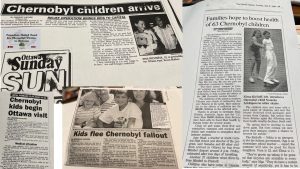
Прэса з свайго боку ўважала, што Чарнобыль ужо не навіна. Катастрофа здарылася чатыры гады таму, пра Беларусь ніхто ня чуў, гэта значыць, што тэма ня будзе цікавіць чытачоў... Пасьля некалькіх тэлефонных гутарак, у тым ліку і з галоўным рэдактакам, праўда, атаўская газэта "Атава Сітызэн" прыслала свайго рэпарцёра. Але 26-га красавіка зьмясціла заміж артыкулу пра Беларусь, на які я разлічвала, артыкуль, які ёй прыслала журналістка з Масквы, дзе Чарнобыль быў прадстаўлены з тамтэйшага пункту гледжання. Толькі нашыя прыяцелі заўважылі маленькую зацемку пра мае стараньні й прыслалі на Фонд некалькі чэкаў. Гэта дазволіла нам выслаць, з дапамогай доктара Рагулі, першую пачку шпрыцаў (на 1600 кан. даляраў) Беларускаму Дабрачыннаму Фонду Дзецям Чарнобыля ў Менску.
У першы год існавання Канадыйскага Фонду Дапамогі Ахвярам Чарнобыля ў Белврусі, ня гледзячы на тое, што ня было тае магчымасьці, якой мы ня выкарысталі, каб інфармаваць людзей пра нядолю нашага народу, мы сабралі толькі каля пяці тысячаў канадыйскіх далараў. І гэта з дапамогай групы журналістаў з Альберты, якія правёўшы два тыдні ў Беларусі, вярнуліся з намерам нам памагчы. Яны былі пэўныя, між іншым, як і мы, што калі людзі ў Канадзе даведаюцца праўду, не адмовяць свае помачы.
У міжчасе, на Сустрэчы Беларусаў Паўночнай Амэрыкі я спаткала Генадзя Грушавога, і была захопленая працай, якую ён рабіў у Беларусі, каб памагчы дзеткам пацярпеўшым ад радыяцыі. Падчас банкету сабрала між прысутнымі каля чатырох тысяч даляраў, якія там і перадала старшыні Беларускага Дабрачыннага Фонду Дзецям Чарнобыля. Калі Генадзь Грушавы прыехаў на запрошаньне Барыса Рагулі ў Канаду ў 1991 годзе, мы з мужам зарганізавалі яму шэраг спатканьняў у Атаве: у Міністэрстве Здароўя, у Чырвоным Крыжы, у Канадыйскай Асацыяцыі Лекараў і.г.д. Найважнейшым спатканьнем аказалася аднак інтэрв'ю, якое ён даў газеце "Атава Сітызэн". Падчас гэтага інтэрв'ю мы й вырашылі прывезьці групу беларускіх дзетак на адпачынак у Атаву. Назаўтра аб гэтым быў у газеце цудоўны артыкуль, і я перадала Грушавому запрашэньне на 15 малышоў. Дзесятак дзён пазьней, мы ужо мелі семдзесят сем'яў гатовых прыняць у сябе чарнобыльскае дзіця. На просьбу Грушавога, мы на гэтым спынілі прыймаць новыя сем'і, бо паводле нашага дагавору, тады яшчэ Беларускі Дабрачынны Фонд меўся плаціць за дарогу дзетак у Канаду, і Грушавы баяўся, што ня знойдзе сродкаў на болей.
Цяжка апісаць энтузіязм нашых супрацоўнікаў і нашае шчасьце ў гэты першы год, калі мы змаглі прывезьці 69 дзетак зь Беларусі ў Канаду на аздараўленьне й летні адпачынак (адно ў вапошні мамэнт захварэла, ня прыехала). Працавалі мы праўда даслоўна дзень і ноч. Раптоўна прэса і тэлебачаньне пачалі цікавіцца нашымі высілкамі. За лета я дала больш пяцідзесяці інтэрв'ю. Была паўстала праблема, калі зь Менску нам паведамілі ў вапошні мамэнт, што 24 дзетак ня змогуць прыехаць дзеля адсутнасьці сродкаў. Прышлося тады знайсьці за тыдзень часу 12000 кан. даляраў на білеты. Узялі пазыку. Тады "мора было па калені", як казаў Янка. У сапраўднасьці-ж, я моцна веру, што Бог быў з намі. Прайшло лета, як у казцы. Каб ня здымкі, дык здавалася-б, што сьнілася. Між іншым, у тым першым годзе мы паслалі разам зь дзеткамі ў Беларусь сорак чатыры каляскі (крэслы на колах, як тут кажуць) для беларускіх інвалідаў. Гэтую праграму ажыцьцявілі дзякуючы сляпой супрацоўніцы - яна зьбірала каляскі ў людзей, якім яны ня былі патрэбныя - і двум спецыялістам, мужу з жонкай, якія іх аднаўлялі. Пакавалі каляскі талакой цэлы дзень. Успамін яшчэ цяпер цешыць.
У 1992 годзе, мы былі здольныя самі аплаціць падарожжа дзетак, бо пасьля кожнага інтэрв'ю людзі слалі дапамогу. Прывезьлі іх 110. У 1993 годзе ўжо трэба было самым, разам зь сем'ямі, якія бралі дзетак, зьбіраць грошы на падарожжа. Кожны год прыяжджала болей маленькіх беларускіх ахвяраў Чарнобыля. У 1997-м прыехала болей за 600.
Да 1994 году, некалькі асобаў рабілі ўсю працу вечарамі. Толькі каб паквітаваць атрыманыя грошы і падзякаваць кожнаму дабрачынцу, займала паўгоду маіх вечароў (бо-ж днём працавала). Другога паўгоду трэба было арганізаваць прыезд дзетак, што таксама займала кожную вольную хвілінку. Людзі пачалі хварэць ад утомленасьці. У 1995 годзе трэба было наняць першага платнага супрацоўніка. Фонд стаўся вялікай арганізацыяй. Пасылалі лекі ў Беларусь, прывозілі лекараў на стажыроўкі ў канадыйскіх шпіталях, завезьлі камп'ютары у Чавускую школу. У красавіку 1992 году, на нашу просьбу канадыйскае Міністэрства Замежных Спраў выслала ў Беларусь на мільён даляраў (тры самалёты) лекаў. У 1993 годзе ахвяравала паўмільёна далараў, каб правесьці ў Беларусі кампанію вакцынацыі. Без нашай інтэрвэнцыі ўсё гэта пайшло-б у Маскву.
За гэтых дзесяць гадоў тысячы дзетак зь Беларусі былі ў Канадзе на адпачынку. Завязаліся сямейныя суадносіны між шматлікімі беларускімі й канадыйскімі сем'ямі. Сотні канадыйцаў адведалі Беларусь (56 толькі ў сакавіку 1996 году!), уключна з журналістамі. У газэтах былі апублікаваныя шматлікія артыкулы пра Беларусь. Адна сэрыя артыкулаў, журналіста Дэвіда Эванса, была апублікаваная пад загалоўкам "Беларусь зь любоўю". І гэта, магчыма, найболей напаўняе сэрца шчасьцем. Нарэшце Канада даведалася пра Беларусь. На апошнім гадавым зьезьдзе Фонду, мы зь Зінай Гімпелевіч з сьлязьмі ў вачах слухалі выказваньні нашых супрацоўнікаў, канадыйцаў, якія так моцна палюбілі наш народ, і так моцна жадаюць яму памагчы.
Цяпер Фонд налічвае тысячы сяброў, ад акіяну да акіяну. Апошняя канадыйская правінцыя, якая далучылася да нас - гэта Новая Зямля (Ньюфаўндленд). Канадыйскія сем'і ўвесь год зьбіраюць грошы, каб аплаціць выдаткі зьвязаныя з прыездам дзіцяці (білет на самалёт, візы, аўтобусы ў Беларусі на лётнішча, страхоўку падчас побыту дзіцяці ў Канадзе, выдаткі зьвязаныя з прыездам перакладчыка - апякуна). Стварылася сэрыя другіх арганізацыяў, якія таксама стараюцца памагчы Беларусі. Высылаюцца лекі, рознае абсталяваньне для шпіталяў, а менавіта для шпіталю ў Чавусах, якому мы першыя пачалі памагаць. Наш Лёнданскі (Лёндан у Канадзе) аддзел, які арганізаваў Др.Рагуля, пераняў праграму лекарскіх стажаў і прывозіць на практыку ў Канаду кожны год па некалькі лекараў. Прывозім шмат дзетак з дзіцячых дамоў, якія вязуць, вяртаючыся, дапамогу сваім сябрам і сяброўкам у доме, дзе жывуць. Іх бяруць сем'і на дванаццаць тыдняў. (Найкарацейшы побыт у Канадзе дзіцяці - шэсьць тыдныў).
Я была старшынёй Фонду да верасьня 1997 году. Цяпер старшыня спадарыня Лёры Лёўс, цудоўная жанчына - настаўніца, якая адначасна вядзе сірочую праграму і якая адаптавала з мужам маленькага беларуса Пецю. Выканаўчай дырэктаркай ёсьць Магі Макляўд. У гэтым годзе Лёры і Магі будуць прысутнічаць на канферэнцыі "Сьвет пасьля Чарнобыля" ў Менску. Управа Фонду налічвае васемнаццаць асобаў з усяе Канады. Дзіцячую праграму вядзе Магі з дапамогай рэгіянальных старшынь і старшынь групаў. Трэба зазначыць, што ўсе гэтыя людзі, за выняткам аднае асобы, працуюць у Фондзе безь ніякай зарплаты. У хуткім часе выйдзе з друку раман, у якім пісьменьніца Бэрыль Ёнг апісвае дасьведчаньне сям'і свайго сына, якая прыймала ў сябе некалькі разоў дзяўчынку з Чавусаў. Яшчэ болей канадыйцаў даведаюцца, што ёсьць такая краіна - Беларусь і што людзі яе моцна патрабуюць дапамогі, каб перажыць вялікую бяду, якую пакінуў ім у спадчыне Савецкі Саюз.
Івонка Сурвілла(2001)
FIFTEEN YEARS HAVE PASSED
I remember like it was yesterday, that morning in April 1986, when my husband and I heard the news on the radio about the explosion of a nuclear power plant in the Soviet Union.
I thought: “My God, if only it weren’t in Belarus!”
It’s hard to describe the resentment we felt when we realized that Belarus was contaminated, because “the wind had driven a nuclear cloud from Ukraine to the north.” It seemed that everything that had been done so far had suddenly lost all meaning. All our efforts over the course of half a century to help Belarus survive difficult times, survive, and become an independent state were in vain...
However, after a while we calmed down. The nuclear department of the Ministry of Health of Canada told us that there was nothing to worry about. They said, “the news from the Soviet Union is good, nothing catastrophic has happened.”
There was no news from Belarus about the disaster either. I really wanted to believe that, as they say here: “If there is no news, it means that everything is fine”...
It was only three years later that we realized that we had been lied to. In 1989, Belarusian newspapers began to write about overcrowded hospitals, began to print pictures of sick children, and asked people of goodwill from all over the world to help. I remember that in our house at that time we only thought and talked about this. What to do, how to help?... The idea quickly arose to somehow share our misfortune with Canada, to start collecting funds to buy and send to Belarus medicines, soap, disposable syringes, everything that was lacking there. We learned that Father Nadson in England had already started doing this. We thought we would join him. The first to think about the need to create an official registered charitable organization in Canada was my husband Janka. This was his condition for taking responsibility for the money. After all, no one can find fault with a registered organization, under the full control of the Canadian administration... Zina Gimpelevich joined us as soon as we shared our intentions with her. The third person we needed to register the Canadian Chernobyl Victims Assistance Fund in Belarus (we needed three signatures from people not from the same family) agreed to be our friend Paulina Pashkevich, born in Canada, but whose parents came from Polessie. Janka and I started working on it in September 1989. We had to prove to the authorities what and why, how, and who... Fortunately, a good lawyer helped us. We received permission to operate the Fund on November 20, 1989, and the status of a public charitable organization - at the end of June 1990.
In the meantime, according to Canadian law, it was necessary to create a board. We assumed that the chairmen of the main Belarusian organizations in Canada should have joined it. And indeed, they all did this by the fourth anniversary of the Chernobyl disaster. The first board of the Canadian Relief Fund for Chernobyl Victims in Belarus consisted of the following persons: Ivonka Survilla - chairman, Zina Gimpelevich - treasurer, Paulina Pashkevich - secretary. Vladyka Nikolai, Dr. Raisa Zhuk-Gryshkevich, Mikola Ganko and Dr. Barys Ragula - members. The first task of the newly created Foundation was to inform as many people as possible about the Chernobyl disaster and its consequences in Belarus. We did not know then how much effort it would cost us. First, for the whole world, which still remembered Chernobyl, the disaster happened in Ukraine, so what does Belarus have to do with it? The Ukrainians, by the way, very cleverly used this circumstance, and in their efforts to help Ukraine, not only completely hushed up the consequences of Chernobyl in Belarus, but also used photographs and information from Belarus for their propaganda.
When I contacted the Red Cross, I was invited out of courtesy to a report by a Ukrainian Red Cross employee responsible for the entire affected area. But when I asked for the floor after the report to ask if he could tell me something about the consequences of Chernobyl in Belarus, he replied that Belarus had not suffered much and that the Red Cross had already sent a mobile medical dispensary there.
The press, for its part, believed that Chernobyl was no longer news. The disaster had happened four years ago, no one had heard of Belarus, which meant that the topic would not interest readers... After several telephone conversations, including with the editor-in-chief, the Ottawa Citizen newspaper sent its reporter. But on April 26, instead of the article about Belarus that I had been counting on, it placed an article that a journalist from Moscow had sent her, where Chernobyl was presented from the local point of view. Only our friends noticed a small note about my efforts and sent several checks to the Fund. This allowed us to send, with the help of Dr. Ragula, the first pack of syringes (for 1,600 Canadian dollars) to the Belarusian Charitable Foundation for the Children of Chernobyl in Minsk.
In the first year of the “Canadian Relief Fund for Chernobyl Victims in Belarus” existence in Belarus, despite the fact that there was no opportunity that we did not use to inform people about the plight of our people, we collected only about five thousand Canadian dollars. And this was with the help of a group of journalists from Alberta, who, after spending two weeks in Belarus, returned with the intention of helping us. They were sure, by the way, like us, that if the people in Canada learned the truth, they would not hesitate to help.
In the meantime, at the Meeting of Belarusians of North America, I met Gennady Hrushavy, and was fascinated by the work he was doing in Belarus to help children affected by radiation. During the banquet, I collected about four thousand dollars from those present, which I then handed over to the chairman of the Belarusian Charitable Foundation for the Children of Chernobyl. When Gennady Hrushavy came to Canada in 1991 at the invitation of Boris Ragula, my husband and I organized a number of meetings for him in Ottawa: at the Ministry of Health, the Red Cross, the Canadian Medical Association, etc. The most important meeting, however, turned out to be the interview he gave to the Ottawa Citizen newspaper. During this interview, we decided to bring a group of Belarusian children to Ottawa for a vacation. The next day, there was a wonderful article about it in the newspaper, and I gave Hrushavy an invitation for 15 kids. Ten days later, we already had seventy families ready to take in a Chernobyl child. At Hrushavoy's request, we stopped accepting new families, because according to our agreement, the Belarusian Charity Fund was supposed to pay for the children's travel to Canada, and Hrushavoy was afraid that he would not find the funds for more.
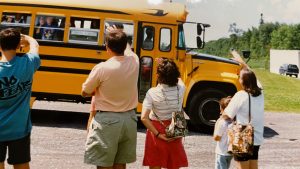
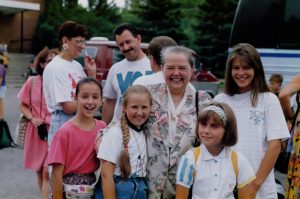
It is difficult to describe the enthusiasm of our employees and our happiness in this first year, when we were able to bring 69 children from Belarus to Canada for health and summer vacation (one got sick at the last moment and did not come). We worked literally day and night. Suddenly, the press and television began to be interested in our efforts. Over the summer, I gave more than fifty interviews. A problem arose when Minsk informed us at the last moment that 24 children would not be able to come due to lack of funds. We had to find 12,000 Canadian dollars for tickets in a week. We took out a loan. Then "the sea was knee-deep," as Yanka said. In reality, I strongly believe that God was with us. The summer passed like a fairy tale. If it weren't for the filming, it would have seemed like a dream. By the way, in that first year, together with the children, we sent forty-four wheelchairs (wheelchairs, as they say here) to Belarus for Belarusian disabled people. This program was implemented thanks to a blind employee - she collected wheelchairs from people who didn't need them - and two specialists, a husband and wife, who restored them. We packed the wheelchairs with talcum powder all day. The memory still pleases me.
In 1992, we were able to pay for the children's trip ourselves, because after each interview, people sent help. We brought 110 of them. In 1993, we had to raise money for the trip ourselves, together with the families who took the children. Every year, more and more young Belarusian victims of Chernobyl came. In 1997, more than 600 came.
Until 1994, several people did all the work in the evenings. Just to pay off the money received and thank each benefactor, it took half of my evenings (because I worked during the day). In the second half of the year, it was necessary to organize the arrival of children, which also took up every free minute. People began to get sick from fatigue. In 1995, it was necessary to hire the first paid employee. The foundation became a large organization. Medicines were sent to Belarus, doctors were brought for internships in Canadian hospitals, computers were brought to the Chauva school. In April 1992, at our request, the Canadian Ministry of Foreign Affairs sent a million dollars (three planes) worth of medicines to Belarus. In 1993, she donated half a million dollars to conduct a vaccination campaign in Belarus. Without our intervention, all of this would have gone to Moscow. During these ten years, thousands of children from Belarus have been to Canada on vacation. Family ties have been established between many Belarusian and Canadian families. Hundreds of Canadians have visited Belarus (56 in March 1996 alone!), including journalists. Numerous articles about Belarus have been published in newspapers. One series of articles, by journalist David Evans, was published under the title "Belarus with Love." And this, perhaps, fills the heart with happiness the most. Finally, Canada has learned about Belarus. At the last annual meeting of the Foundation, Zina Gimpelevich and I listened with tears in our eyes to the statements of our employees, Canadians, who have come to love our people so much and so much want to help them.
Now the Foundation has thousands of friends, from ocean to ocean. The latest Canadian province to join us is Novaya Zemlya (Newfoundland). Canadian families collect money all year round to cover the costs associated with the child's arrival (airline ticket, visas, buses in Belarus to the airport, insurance during the child's stay in Canada, costs associated with the arrival of an interpreter-guardian). A series of other organizations have been created that are also trying to help Belarus. Medicines and various equipment are sent to hospitals, namely to the hospital in Chavusy, which we were the first to start helping. Our London (London in Canada) department, organized by Dr. Ragul, has taken over the medical internship program and brings several doctors to Canada for practice every year. We bring many children from orphanages, who, upon returning, take care of their friends and girlfriends in the house where they live. Families take them for twelve weeks. (The shortest stay of a child in Canada is six weeks).
I was the Chair of the Foundation until September 1997. The current Chair is Ms. Lori Lause?, a wonderful woman - a teacher, who also runs the orphan program and who, together with her husband, adopted a little Belarusian, Petya. The Executive Director is Maggie MacLeod. This year Lori and Maggie will be attending the "World After Chernobyl" conference in Minsk. The Foundation's board consists of eighteen people from all over Canada. Maggie runs the children's program with the help of regional chairs and group chairs. It should be noted that all of these people, with the exception of one person, work for the Foundation without any salary. A novel will soon be published in which the writer Beryl Yong describes the experience of her son's family, which took in a girl from Chavus several times. Even more Canadians will learn that there is such a country as Belarus and that its people desperately need help to survive the great misfortune that the Soviet Union left them as a legacy.
Ivonka Survilla (2001)


